Table of Contents
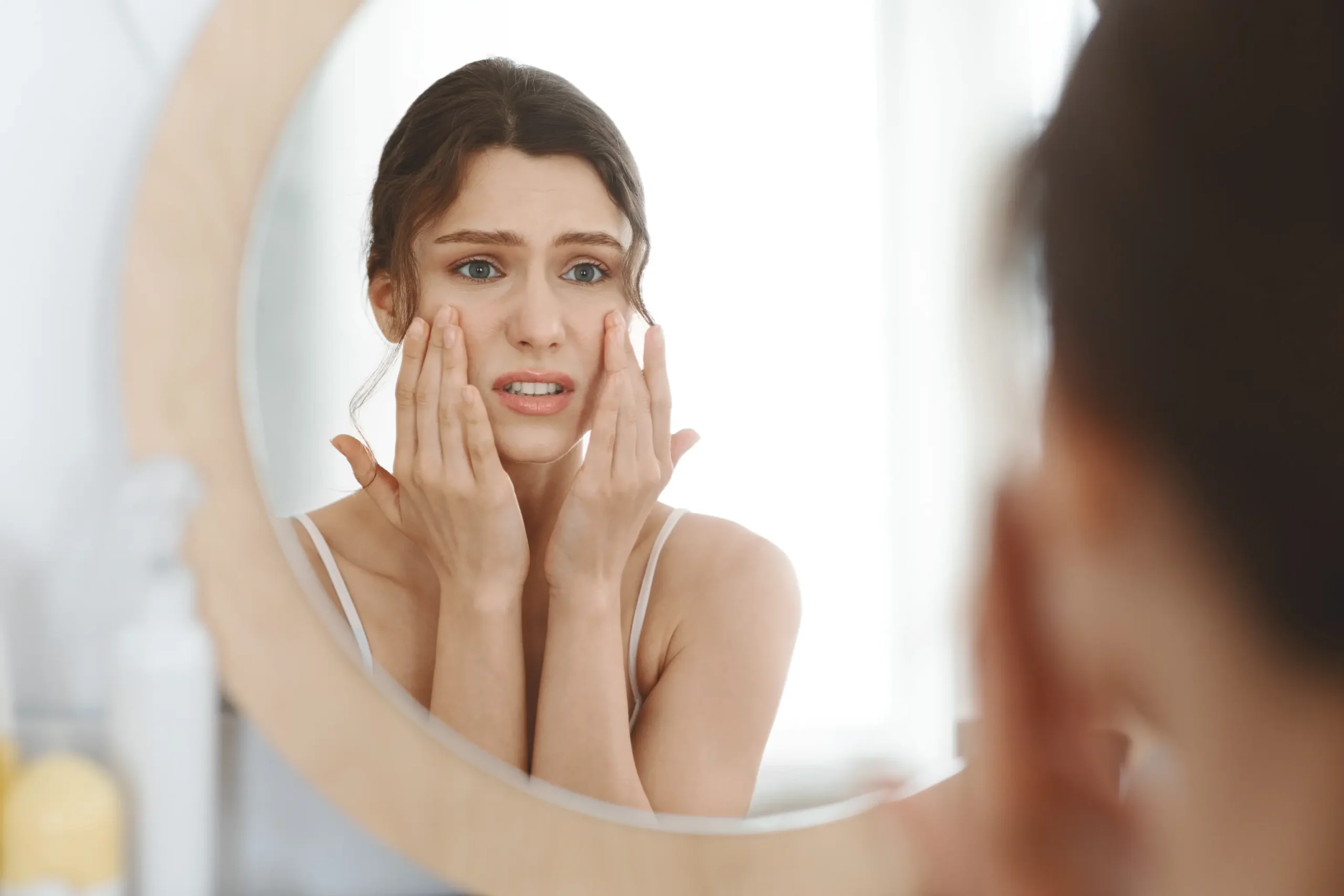
Take a walk down the aisle of any CVS, Walgreens, ULTA, Sephora or Target and you are overwhelmed with the sheer volume of facial cleansers out there. However which is the right one for me and as a matter of fact is it even needed?
“My momma told me to wash my face with water and I’ll be fine.”
EEEEEEEP. WAMMP WAGHHHH
According to Anjali Mahto (2024) cleansing is the most important step of the skin care routine. It is integral to maintain skin hygiene and NO dear, water is usually not enough.
Whether you prefer bar soap, liquid cleanser or other means, do your best to choose the correct cleanser for your skin type.
Oily Skin
This skin type is more subjective, and is characterized as having more active sebaceous glands. Although, skin tends to get less oily as we age: climate, hormones and using the incorrect products for your skin may make your skin more oily. With this skin type you may feel compelled to opt for the strongest most astringent products to reduce sebum or oil, however these products cannot tell the difference between excess sebum and the lipids within your skin that you need to keep your skin barrier intact (Draelos et.al, 2024). This skin type may not require a lot of extra moisture but definitely needs to be well hydrated to maintain skin barrier health. For this skin type you should opt for a gentle cleanser. In this instance, I am not talking about people with acne, just oily skin.
WTF is a gentle cleanser?
Cleansers that are alcohol free * ( I’ll circle back to this), avoid harsh surfactants, have a pH close to skin pH (4.5-5) and rinse well.
But every product seems to call itself a gentle cleanser?
YEP. pretty much.
Gentle is also subjective and dependent on your needs. That is why you MUST read the ingredient list of any product you purchase. If after a few minutes of cleansing your face, you cannot smile without your skin feeling as if it is going to crack into a thousand pieces…that may not be the best cleanser for you.
Oily skin Continued…
Now if you have active acne, that’s a different ball game. According to Dréno et al. (2020) benzoyl peroxide (BPO) is the best at reducing inflammation and killing bacteria associated with causing most forms of acne.
Cleansers with Papaya, soy, retinol, mandelic acid or salicylic acid are effective as well, however when BPO is combined with topical antibiotics prescribed by your Health care provider it prevents antibiotic resistance from occurring.
If you are using a cleanser with BPO or Salicylic acid you should avoid over exfoliating the skin by using products with jagged particles (beads, pumice stone bits). Try products with mild chemical exfoliants (lactic acid). These products work really well especially when in combination with anti inflammatory ingredients such as aloe vera and niacinamide. Look for products that have humectants like hyaluronic acid or glycerin to help rehydrate the skin.
Microbiome Cognizant Cleansers
There has been a push for products that are designed to prevent skin microbiome disruption. DOPE. But, Confusing AF.
Let’s put a pin in this topic and circle back.
Dry Skin
As we age, our skin tends to get drier. Add menopause to the mix and skin flakes are floating everywhere.
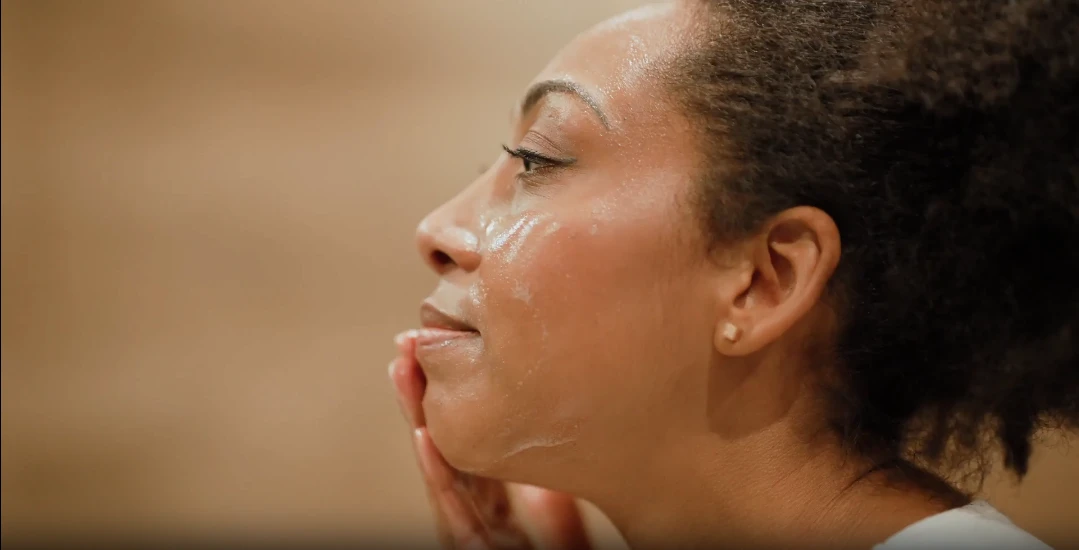
Even cleansing with plain water can deplete the skin barrier and health. When out shopping, choose a cleanser with hydrators and conditioning ingredients such as hyaluronic acid, glycerin, ceramides, and oatmeal. Avoid products with alcohols and fragrances. Micellar water works really well for this skin type, as well as cleansing oils, or balms or products suitable for removing makeup.
Normal Skin
Ahh the elusive normal skin. Not too oily and not too dry. Keep it simple. It’s ok to use an everyday cleanser. Avoid using products with alcohol and avoid using too hot water.
But I see alcohol all the time, in the ingredient list!
Yep, you do!
Alcohols such as polyvinyl alcohol (PVA) are often added to the ingredient list to improve rinsability (Draelos et al, 2024).
Combination Skin
Are some parts of your face oily while others are dry (raise hand). You have the very difficult task of balancing two very different skin types on one face. Good luck. Gel cleansers with enzymatic properties or salicylic acid are very good at unclogging pores and also not drying the skin too much in areas that are not as greasy. Personally, I base my decision on the season and how my skin is feeling. If it is the summertime and my skin is greasier than I would like or if I am having hormonal breakouts, I use a salicylic acid based gel cleanser. During the winter, I tend to use a less abrasive cleanser, one more suited for someone with normal skin. Use your judgement, as you find out what works for your body.
Unfortunately, the learning process takes a lot of trial and error. Not every product recommended will work for you. Please use this blog post as a jumping block towards your journey to understanding how to take the best care of your skin!
Remember we are evolving and learning from the mistakes and triumphs of our predecessors. My great grandmother swore by Vaseline and my grandmother still only uses Clarins at 93.
My name is Dr. Laurel B., advanced practice nurse and lead clinician at Mrs. Webb Aesthetic located deeeeep in Brooklyn, in a tiny hood called Marine Park.
References
Anjali Mahto. (2018). The Skincare Bible. Penguin UK.
Draelos, Z. D., Dover, F., & Alam, M. (2024). Cosmeceuticals: Procedures in Cosmetic Dermatology Series (4th ed.). Elsevier.
Dréno, B., Dagnelie, M. A., Khammari, A., & Corvec, S. (2020). The Skin Microbiome: A New Actor in Inflammatory Acne. American journal of clinical dermatology, 21(Suppl 1), 18–24.
https://doi.org/10.1007/s40257-020-00531-1
Taylor, S. C., & Lim, H. (2026). Taylor and Kelly’s Dermatology for Skin of Color, Third Edition. McGraw Hill Professional.
Yang, L., Ganse, L., & Jimenez, S. (2019). The Korean Skincare Bible. Cassell.